Everything With a Battery Cooks in a Parked Car
I set two rules before I put a dashcam in my 2014 Dodge Dart, and between them they ruled out almost everything on the market.
Rule one: don’t wire into the starter battery. A parking-mode cam that hardwires into the car’s battery will happily sit there drawing power for hours after you’ve walked away, and in a Chicago January that’s the difference between a car that starts and a car that doesn’t. I wasn’t going to trade a fender-bender’s worth of footage for a dead battery on a cold morning.
Rule two came from the other half of the year. A parked car in a Chicago July is an oven — dashboard temperatures climb well past what any consumer-electronics datasheet promises to survive — and almost every device in this category hides a lithium-ion cell somewhere: in the camera, in the aux battery, in the hotspot you’d need to make it “smart.” Lithium-ion hates heat. At best it swells and dies early; at worst it vents. I did not want a small fire on my dashboard.
So the spec, before a single product entered it, was strange: no draw on the starter battery, and as little lithium-ion in the hot cabin as I could manage. It took me most of a year and a small graveyard of returned devices to actually meet it.
The graveyard
The no-name brands went first. Cheap, generous on paper, and physically unable to survive a summer — they’d overheat and shut down, or worse, keep their light on while recording nothing, which you discover only on the one day you need the footage.
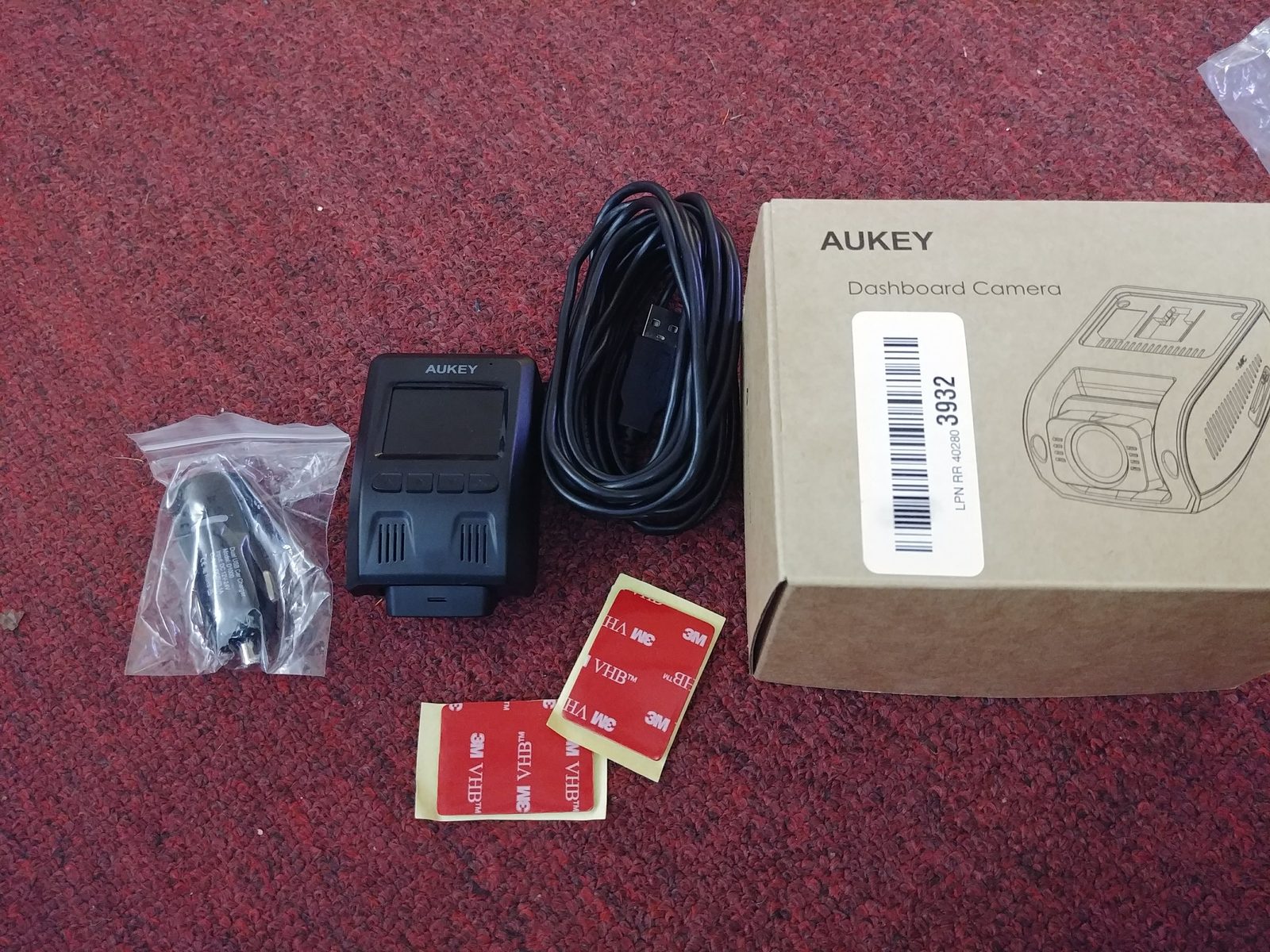
Aukey was the first real one. It handled parking recording honestly, off a small internal battery so it could keep filming after the car powered down. But a small battery means a few minutes of parking coverage, and it means a lithium cell baking in exactly the spot I was trying to keep them out of. BlackSys CH100 came and went for reasons I’ve since forgotten — it didn’t earn a place, and I didn’t write down why.
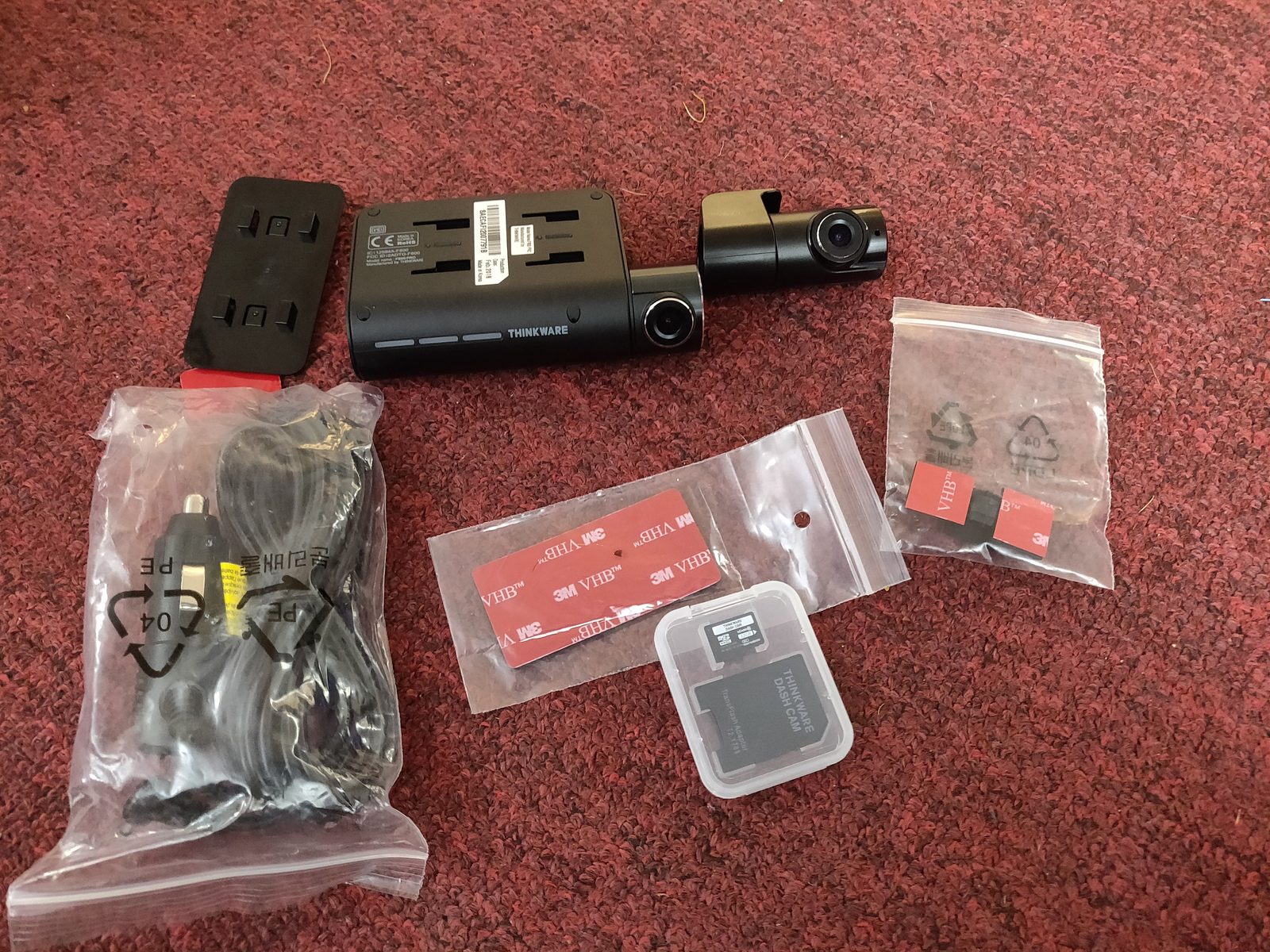
Thinkware’s F800 Pro got closest, and it’s where both rules finally held at once. It was the first camera in the pile that felt built rather than assembled — it took the heat without complaint — and pairing it with a Cellink NEO auxiliary battery solved the power problem the way I’d wanted all along. The NEO is an external pack that charges while you drive and runs the camera while you’re parked, so it never draws on the starter battery. And its cells are LiFePO4 — lithium iron phosphate, the chemistry built for this exact job: it shrugs off heat that would swell or vent an ordinary lithium-ion pack, and it self-limits around 70°C instead of catching fire. Both walls handled at once — no starter-battery draw, no fire-risk cell cooking on the dash. I was nearly done.
Except by then the goalposts had moved. I didn’t just want footage I could review later; I wanted to look at the car from my phone — while it was parked, from anywhere. Live remote viewing. The Thinkware couldn’t do it.
The one that worked, and the bill it came with
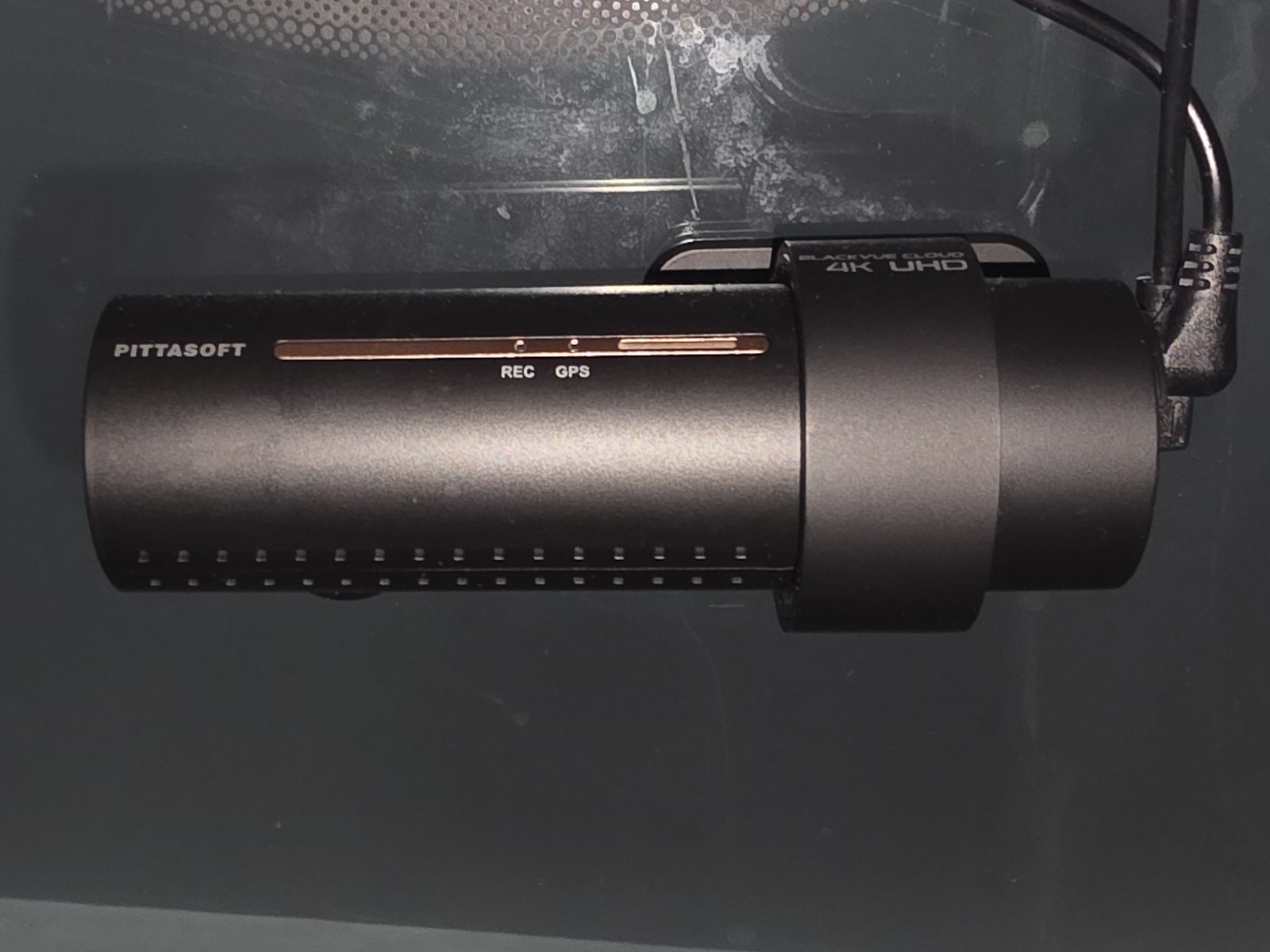
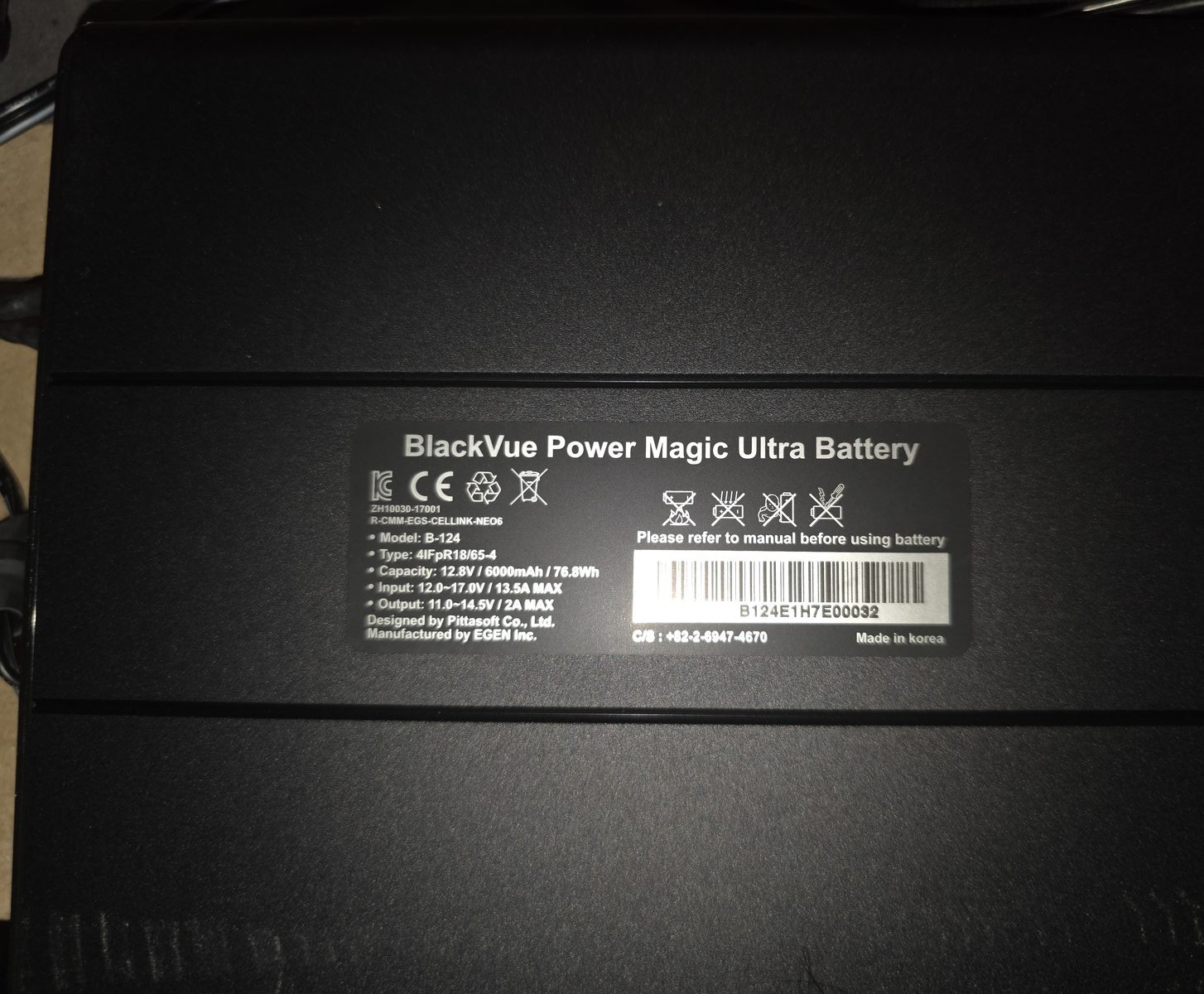
The BlackVue DR900S 2-channel gave me the one thing the Thinkware couldn’t: live remote viewing, from anywhere, over the cloud. The battery question was already settled — and BlackVue’s own Power Magic Ultra pack turned out to be the same answer under a different name. It’s LiFePO4 too: 12.8 volts across four cells, where a lithium-ion pack that size would read closer to 14.4. The sticker on the bottom even admits the resemblance — it’s built by EGEN, the same company that makes the Cellink NEO I’d just been running. So I didn’t change my power strategy at all. I changed the camera on the end of it, because the camera was the entire reason for the swap. I sold off the graveyard and committed.
“Committed” is generous, because remote viewing carries a requirement nobody prints on the box: the camera has to be on the internet. Continuously.
The dashcam that needed a data plan
This is where a dashcam project stopped being a dashcam project. Live view, GPS tracking, two-way audio — all of it needs the car to hold a live connection, and a car doesn’t come with one. The obvious fix is a mobile hotspot, and the carriers were glad to sell me one.
Every hotspot AT&T or T-Mobile offered had a lithium-ion battery in it. We are back at rule two. A pocket hotspot is designed to live in your pocket, not to bake on a dashboard through a Chicago summer, and I was not going to answer a fire-risk problem by adding a second lithium cell to the exact hot box I was trying to keep them out of. A few carrier units would run on USB power with the battery as a buffer — but they only powered on if you pressed the button, so every time the car cut power at a stop they stayed dark until I woke them by hand. A camera that’s online only when I remember to switch on the hotspot is not online.
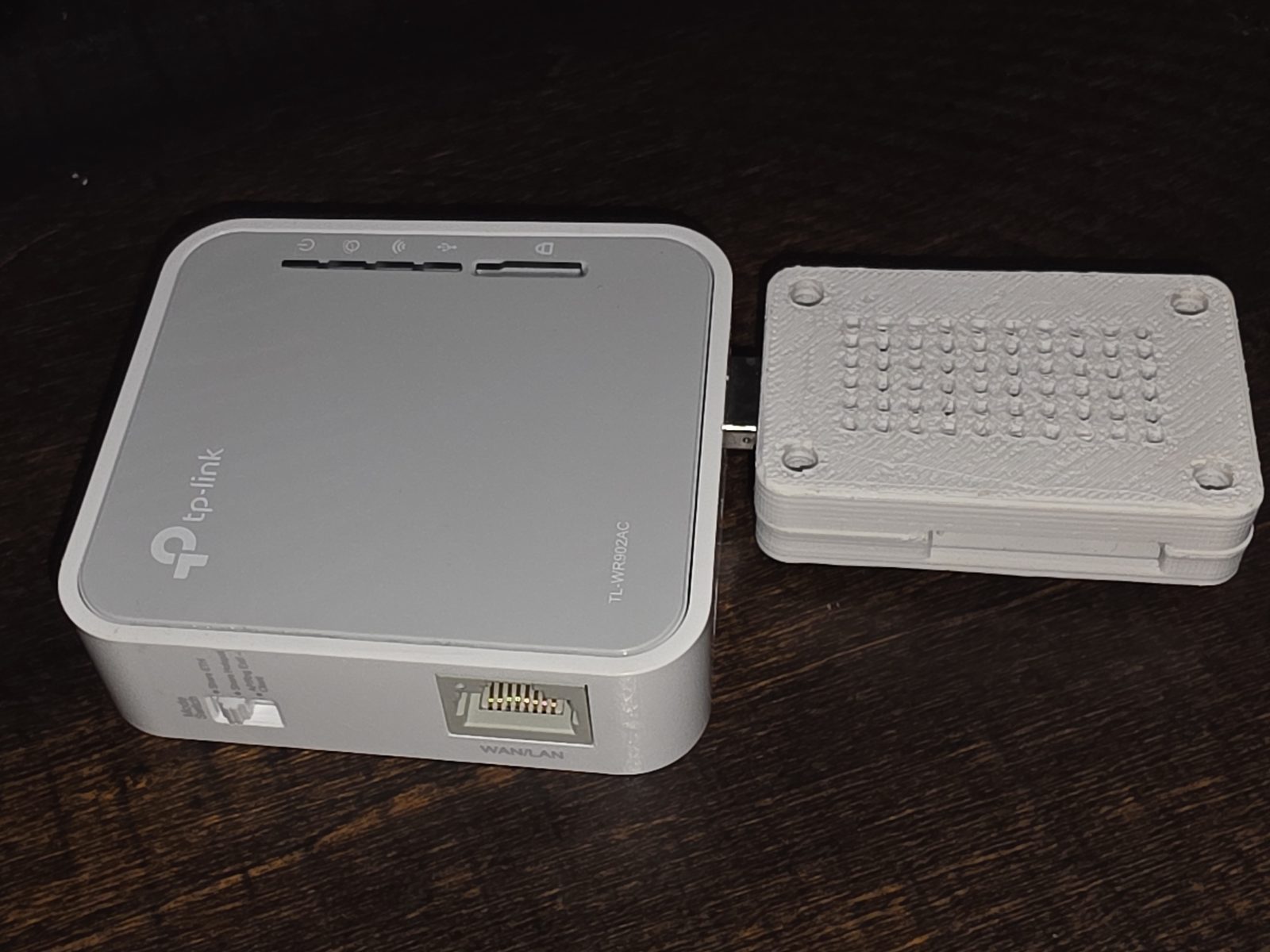
So I built the connection instead. A Quectel EC25-A LTE modem — the North-American-band variant — and a TP-Link TL-WR902AC travel router, both running off the cigarette socket, no battery anywhere in the path — the same build-it-myself-because-the-market-won’t reflex I’d already worn out on home routers, pointed at the car. It powers up when the car does, hands the BlackVue a Wi-Fi network, and 4G turns out to be far more than a dashcam feed asks for. I 3D-printed an enclosure for the thing, in a filament that wouldn’t sag in the heat — because of course that was a design constraint now. It’s the same instinct that has me building my own boxes instead of renting the tidy managed version: if the off-the-shelf answer keeps failing my constraints, I build the one that doesn’t.
What the truckers already knew
One problem left, and it was the one I understood least. The BlackVue battery, charging off the car, would sometimes pull more current than the circuit was happy with, and the socket fuse blew. Repeatedly. A blown fuse leaves the whole rig dead until I happen to notice — which defeats the entire always-on point of it.
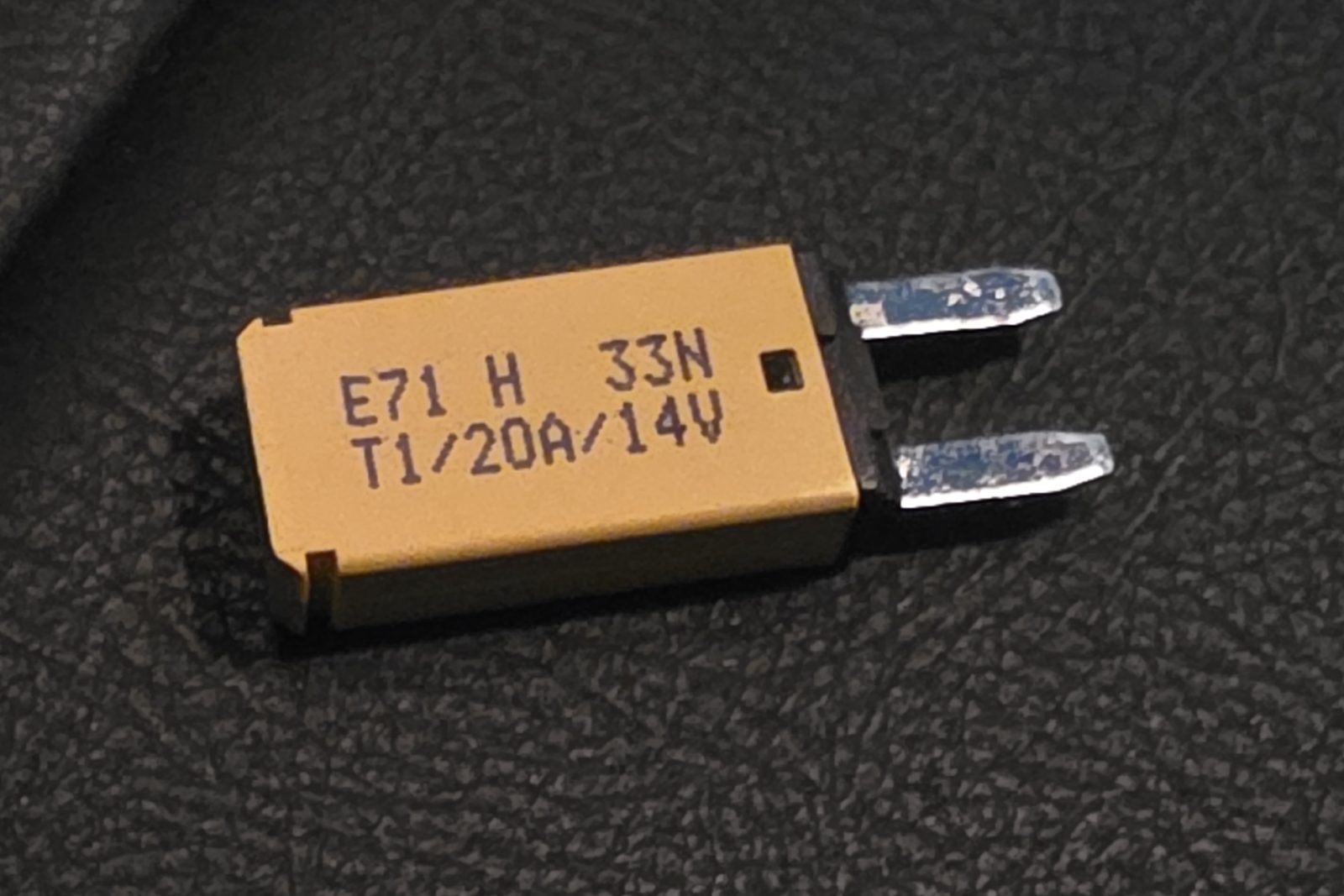
The answer was on trucker forums, where people run far more electrical load off a vehicle than I ever will. The move is to stop using a one-shot fuse at all. A standard blade fuse sacrifices itself on the first surge and stays dead; what they run instead is a Type I self-resetting circuit breaker in the same mini-blade footprint — it trips on the surge and then, a moment later, resets itself once the current settles. I swapped in a 20-amp resettable breaker, and the problem didn’t so much get fixed as turn self-healing: a surge still trips it now and then, and it simply comes back. I haven’t touched it since.
The rig, and the fact underneath it
What I ended up with is a car I can open on my phone from anywhere: live front and rear video, real-time speed and location, event alerts, even two-way audio — I can talk through the parked car. All of it rides on an inexpensive LTE modem and a travel router I built into a dongle, feeding a camera that never draws on the starter battery and never parks a lithium-ion cell where the heat can reach it.
What I actually built, when I’m honest about it, wasn’t a dashcam setup. It was a power-and-networking project with a camera on the end, and the entire rig is organized around one physical fact I kept underestimating: a parked car is a harsher place for electronics than almost anywhere else they’ll ever sit. Everything that failed, failed on the heat or on the battery I refused to touch. Everything that survived was chosen against those same two walls — LiFePO4 where a cell was unavoidable, wall power where it wasn’t, and a breaker that just assumes the surge will come back.
Next in “Hardware the spec sheet lied about” Not Every FLAC Is Lossless →